 Gifts by Interest
 Birthday Gifts
 Personalised Gifts
 Christmas Gifts
 Custom Apparel
 Mono.Gift Magazin
Which Promotional Gifts Do People Actually Keep?
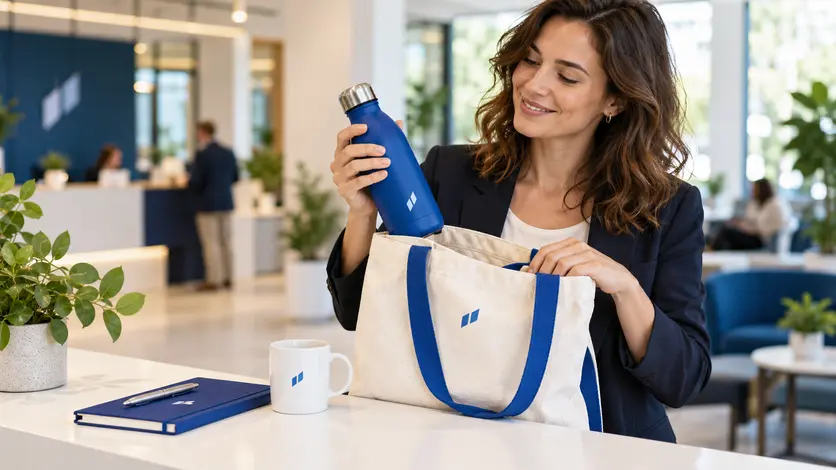
Usefulness and quality determine whether a promotional gift is welcome. A good pen, a practical bag or a reliable drinking bottle can become part of someone's routine. An uncomfortable, fragile or heavily branded item is much more likely to be discarded. Choosing fewer useful products can therefore make more sense than distributing a larger quantity of poor-quality giveaways.
Pens with your logo


What do recipients value?
The industry studies cited in the German edition of this guide examine ownership, usefulness and brand recall. Their findings refer to different years and markets, so they should not be treated as a forecast for an individual campaign:
- The GWW impact study from 2017 reported that 98% of Germans over 14 owned at least one promotional product and 93% used one. The study was commissioned by the German promotional products industry association.
- The same study reported advertiser recall of 59–70% for promotional products, compared with approximately 26–29% for television, radio and print advertising.
- The PPAI Consumer Study 2021, commissioned by PPAI in the US market, reported usefulness as a reason for keeping an item for 75.4% of respondents; 48.7% said they kept items for more than five years.
- The PPAI 2025 consumer study, The 5-Second Impact, reported that 54% still had their most recently received item, 61% remembered the brand and 76% had looked up the brand after receiving it.
- The DIMA/GWW research cited in the German guide reported that 90% used the item themselves rather than passing it on, and that 40% of items remained in use for more than two years.
These studies point towards the same practical principle: a gift earns attention through repeated use. Poor materials or unreliable construction can create the opposite impression.
What gets kept, and what gets thrown away?
Forum accounts discussed in the German guide provide an informal counterpoint to supplier advertising. People praise pens that write well, insulated flasks, useful USB drives and measuring tools that remain in service for years. They criticise flimsy keyrings, tiny-capacity USB drives and notepads whose covers are dominated by a company logo.
Such accounts are anecdotes rather than representative research. They nevertheless illustrate a useful design question: does the branding support the product, or make it less pleasant to use?
Seven criteria for choosing a promotional gift
| Criterion | Question to ask |
|---|---|
| Everyday usefulness | Will the recipient use it next week, and potentially next year? |
| Material and workmanship | Does its quality reflect the impression you want your brand to make? |
| Audience fit | Does it suit the recipient's work, interests and surroundings? |
| Durability | Can it withstand repeated use? |
| Appropriate branding | Is the logo visible without interfering with the product's function? |
| Occasion | Is this an event giveaway, an onboarding gift or a personal thank-you? |
| Environmental claims | Are material and sustainability claims supported by evidence? |
A folding ruler can be an excellent gift for a tradesperson and irrelevant to someone who rarely uses tools. A notebook may suit office work; an insulated flask may suit both the office and a building site. Audience fit matters more than a generic bestseller ranking.
Product groups worth considering
The GWW Promotional Products Monitor 2024, cited in the German edition, places writing instruments among the highest-turnover product groups, followed by bags and drinkware. Sales volume alone does not establish effectiveness, but these groups offer many practical uses.
Explore pens with your logo, bottles and other drinkware, bags and notebooks. Check the relevant product's material, dimensions, colour options and available branding methods before deciding.
Drinkware for everyday use


Employee gifts: show attention to the individual
A correctly spelt name, useful contents and thoughtful presentation can matter more than the number of items in a gift box. A misspelt name, an unsuitable product or an obviously impersonal selection can undermine the intended gesture.
Employee gifts have their own tax treatment. Do not apply the rules for gifts to business contacts automatically to staff. See the German tax guide and the guide to occasions and audiences.
Frequently asked questions
Which promotional gifts are most likely to be kept?
Useful, well-made items that suit the recipient. Pens, bags and drinkware are practical starting points, but no product group works equally well for every audience.
Is quality more important than quantity?
Quality is essential to the impression the gift creates. Set a minimum standard for usefulness and workmanship before deciding how many items to order.
How prominent should the logo be?
Visible enough to identify the giver, but not so dominant that the recipient avoids using the product. The appropriate size depends on the item and its print area.
What makes a good employee gift?
A product suited to the person, careful personalisation and thoughtful presentation. Check names, spelling and the relevant payroll treatment before ordering.
How much should I spend?
Start with the occasion, audience and intended use. Compare the complete cost, including branding and delivery, and check any applicable tax or acceptance rules separately.
